
The landlord's guide to rental readiness.
Plain answers on staging, furnishing and letting faster.
Presentation, timing and tenant demand, explained the way we would explain it to a landlord who asked us over a coffee rather than a sales page. No jargon, no invented numbers, just what actually moves a rental from listed to let.
- Written for landlords, letting agents and HMO operators
- No prices here, every quote is itemised and fixed within 24 hours
- Plain English, no jargon and no invented numbers
01
Does furnishing actually increase rent
The honest answer, and why presentation earns more than it costs.
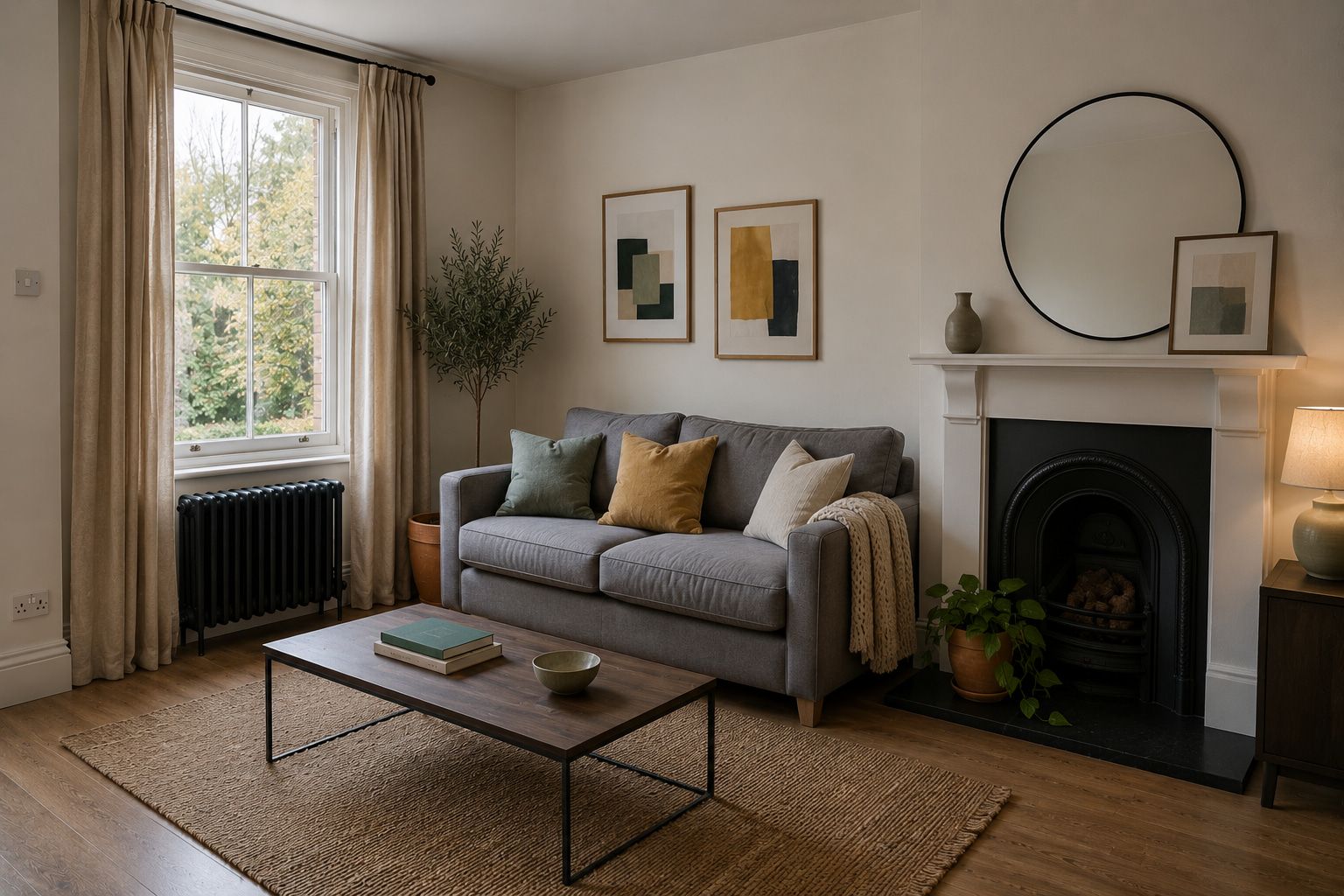
Furnishing on its own doesn't guarantee a higher rent. What moves the number is how a property presents against everything else a tenant is comparing it to. Two identical flats on the same street, listed at the same price, don't get the same offers if one photographs like a home and the other photographs like an empty box with a landlord's furniture in it.
Tenants make a decision in the first few photographs of a listing, long before a viewing is booked.
A property that's styled, staged and properly lit in those photographs gets more enquiries, and more enquiries is what gives a landlord room to hold the asking rent rather than negotiate it down after a quiet fortnight.
That's the mechanism, not a guarantee. We supply the accessories, soft furnishings and styling, and install everything ourselves, room by room. The client keeps everything afterwards, it isn't hired and nothing is collected back. The property is left better for the whole tenancy, not just for the photos.
02
Cutting void periods
Why the gap between tenancies is the most expensive week in a letting calendar.
The maths is that simple, and it's easy to lose sight of, because a void doesn't arrive as a single bill. It arrives as several weeks of nothing happening while a listing sits unanswered.
A void week costs a week's rent.
Most voids aren't caused by a lack of demand for the area, they're caused by a property that takes longer than it needs to look ready. A flat that stands empty between tenants, curtains down, no lighting, nothing on the walls, reads as unfinished rather than available, and tenants scroll past unfinished.
Shortening a void starts before the previous tenant has even left. Scheduling the install to land the day the property is empty, rather than a week or two after, means the listing goes live styled from photograph one instead of being relisted once the flat finally looks presentable. The quicker a property looks ready, the quicker it stops costing rent for standing empty.
03
Furnished vs unfurnished
Neither is right for every property. The question that matters is which tenant you're trying to attract, and what they expect to see the moment they walk in.
Unfurnished suits a tenant who owns their own furniture and is settling in for the long term, typically a family or a couple taking a longer lease. Furnished suits a tenant who needs to move quickly and doesn't want the cost or hassle of buying and moving furniture, typically a young professional, a sharer, or someone relocating for work.
A staged, accessorised property sits between the two and works for both.
The curtains, cushions, artwork, kitchen equipment and lighting we install aren't a furniture pack, there's no bed or sofa involved, but they're enough to make an unfurnished property photograph and view like a finished home rather than a bare shell, without stopping a furniture-owning tenant from moving their own things in. It widens the pool of tenants who can picture themselves living there.
04
HMO staging, priced per room
Why the maths on a house in multiple occupation looks different to a single let.
Every room that needs to attract its own tenant needs to present on its own, which means its own bedding, curtains, lighting and finishing detail, not a share of whatever was left over from furnishing the lounge.
A house in multiple occupation isn't one let, it's several.
Because of that, HMO staging is priced per room rather than per property. A four-bedroom HMO is closer to four small staging jobs than one job with four bedrooms in it, and the quote reflects that directly. When you enquire, we itemise the price room by room so you can see exactly what each one costs and approve or adjust it before anything is booked.
The upside is that per-room pricing scales with the income the property earns. HMOs typically produce a stronger return per visit than a single let of the same size, because winning back one empty room in a shared house is a smaller, cheaper decision than winning back a whole flat, and it can be done room by room without disturbing the tenants already living there.